
Fattoria Mancini is a winery founded in 1861.
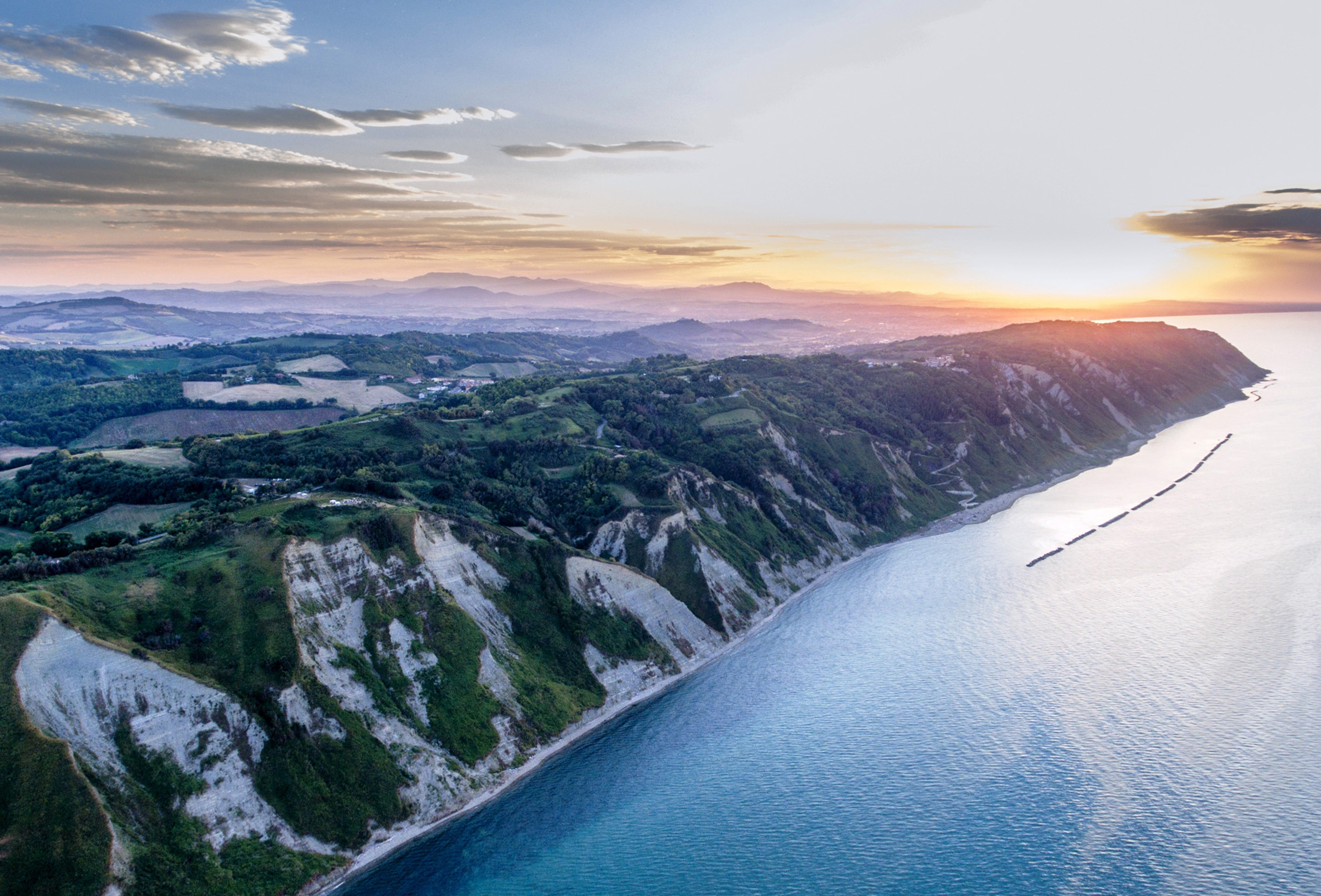
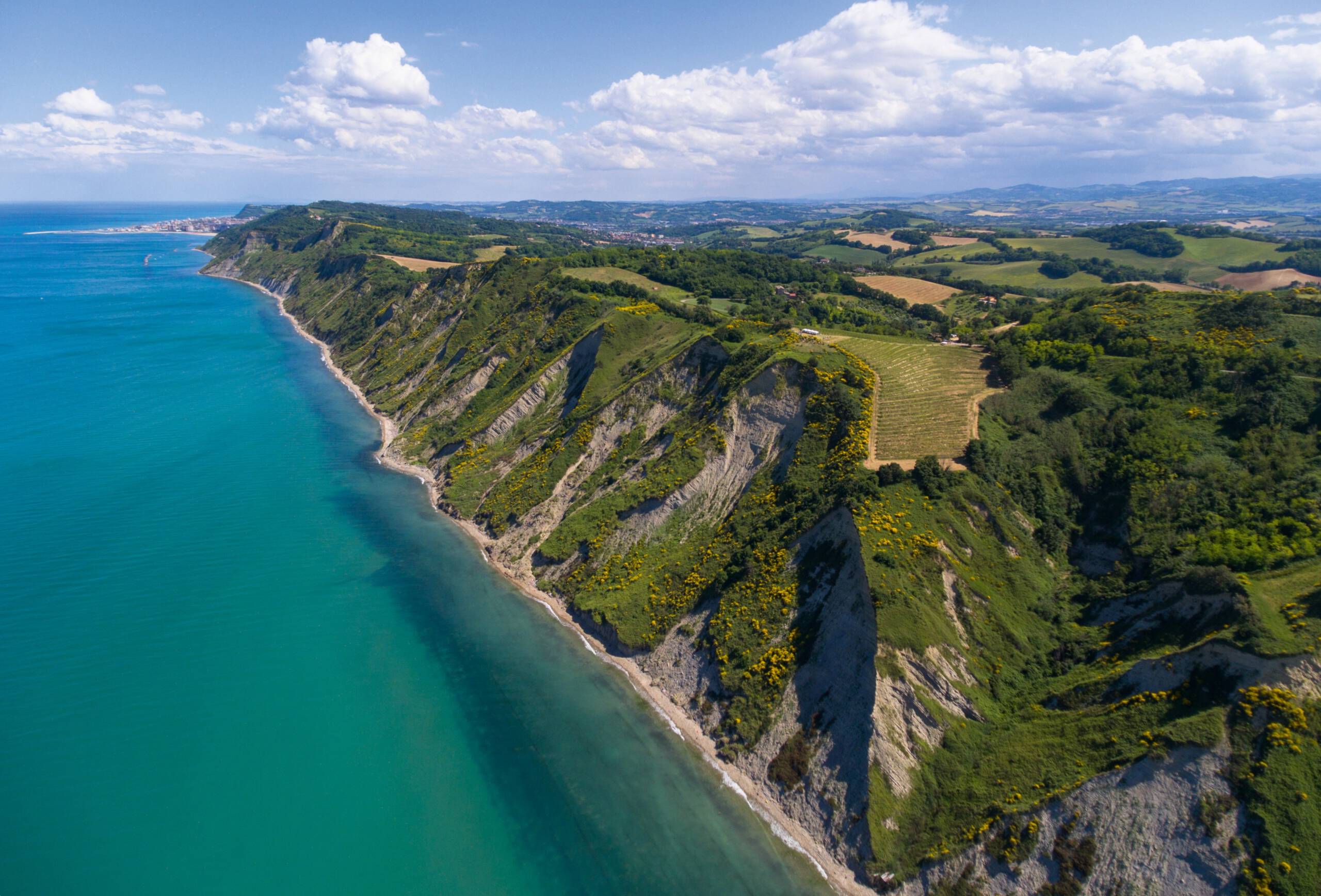
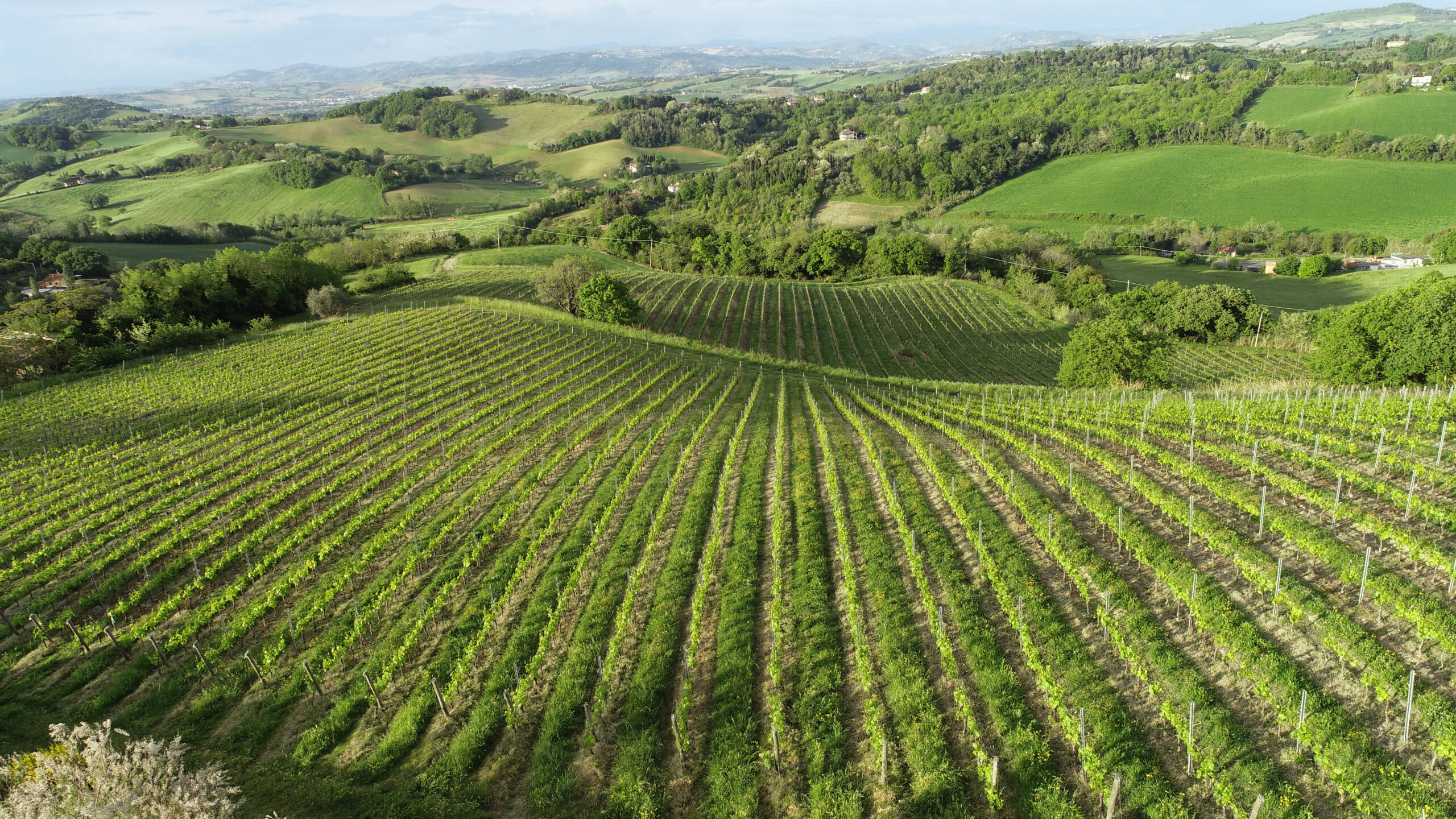
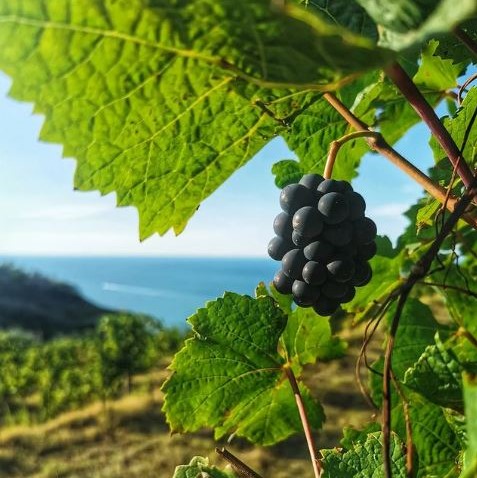
Our production is based on approximately 20 hectares of vineyards located within the Monte San Bartolo Natural Park, at the northernmost tip of the Marche region. The vineyards are near the spectacular high cliffs of Focara, a promontory that rises sharply above the Adriatic Sea, just a few kilometers from the gates of Pesaro.
The cool microclimate of this north-facing stretch of coast, combined with the calcareous sandstone soil, allows us to produce highly age-worthy wines with a perfect balance of structure, depth, freshness, and elegance.
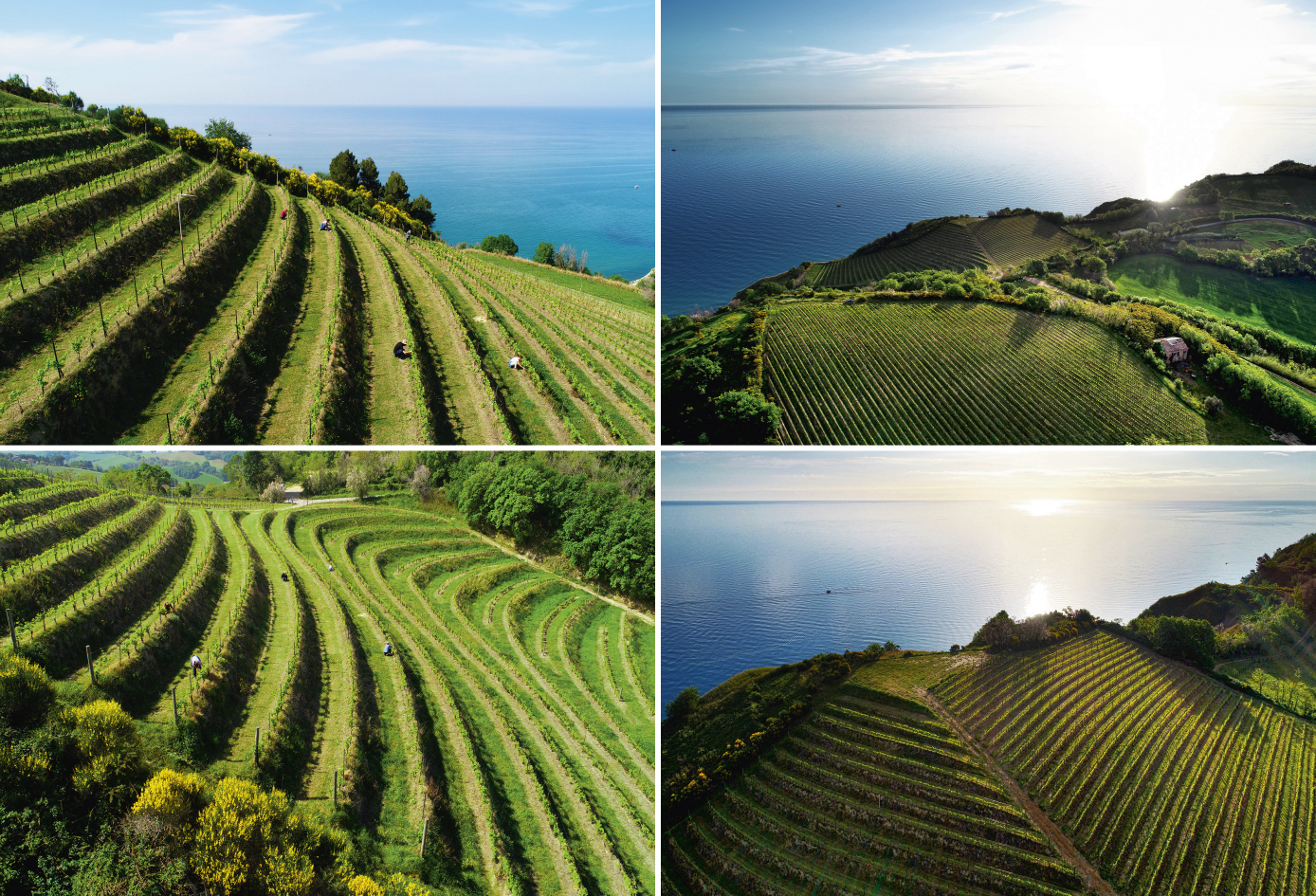
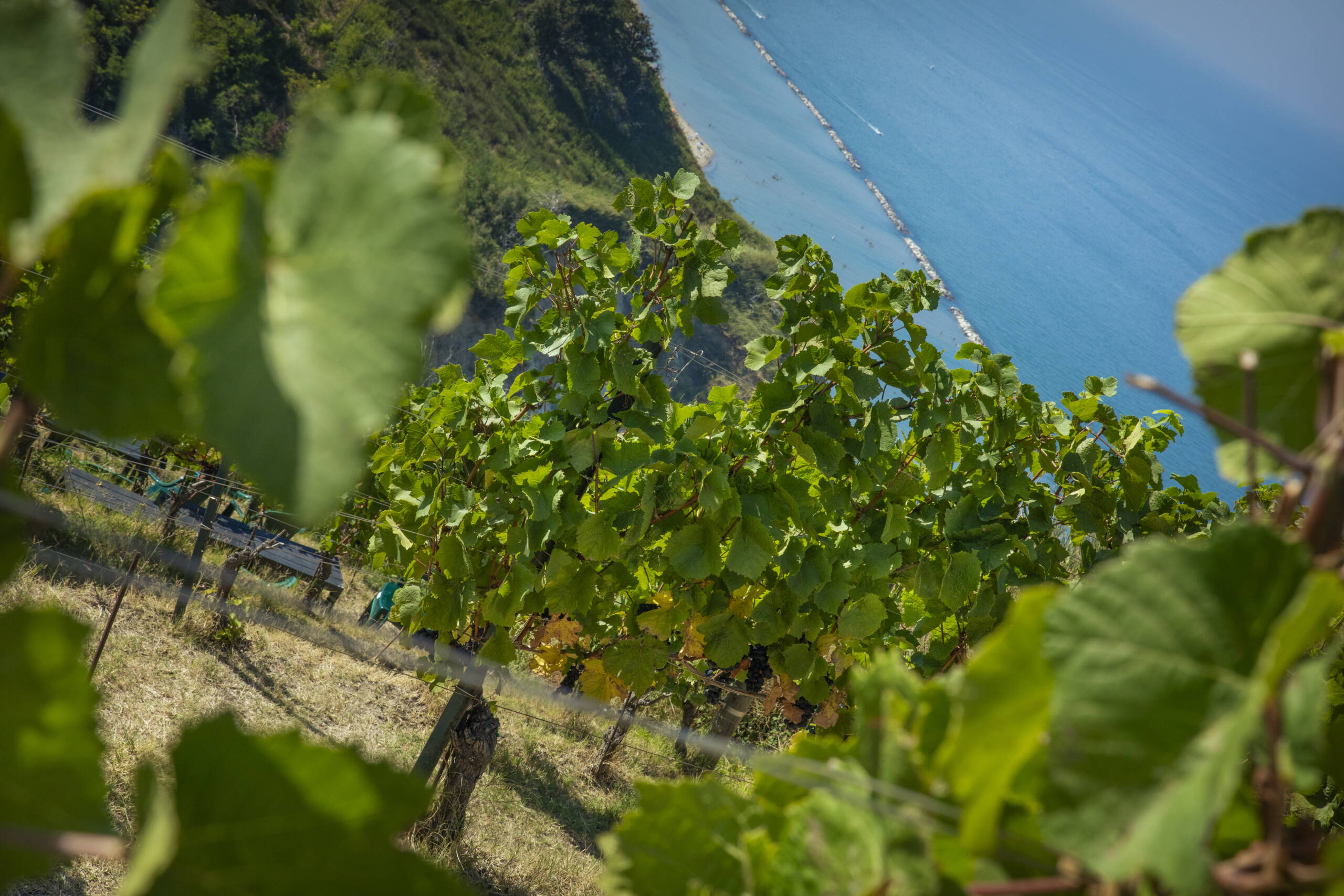
Monte San Bartolo, a stretch of high coastline between Gabicce Mare and Pesaro
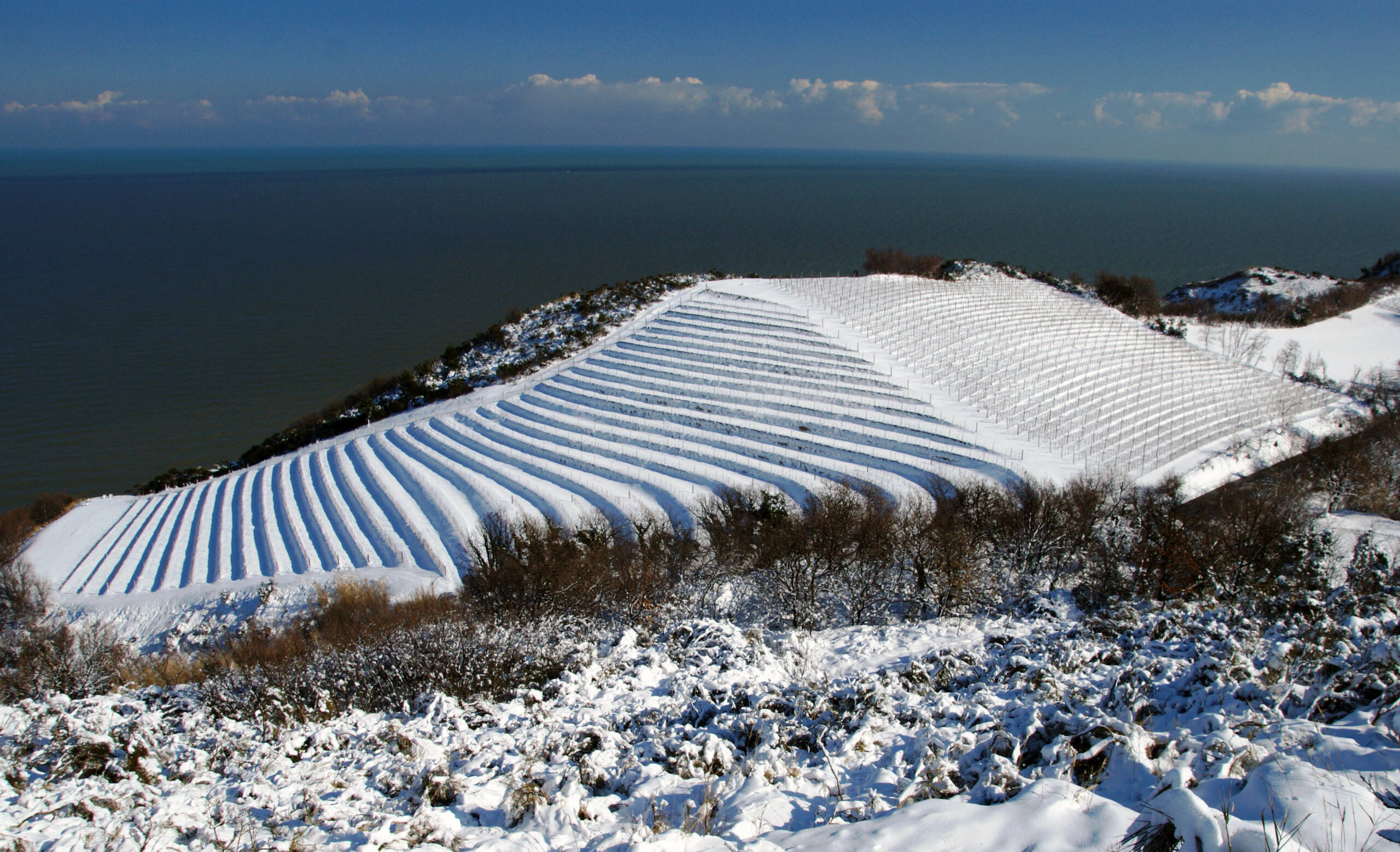
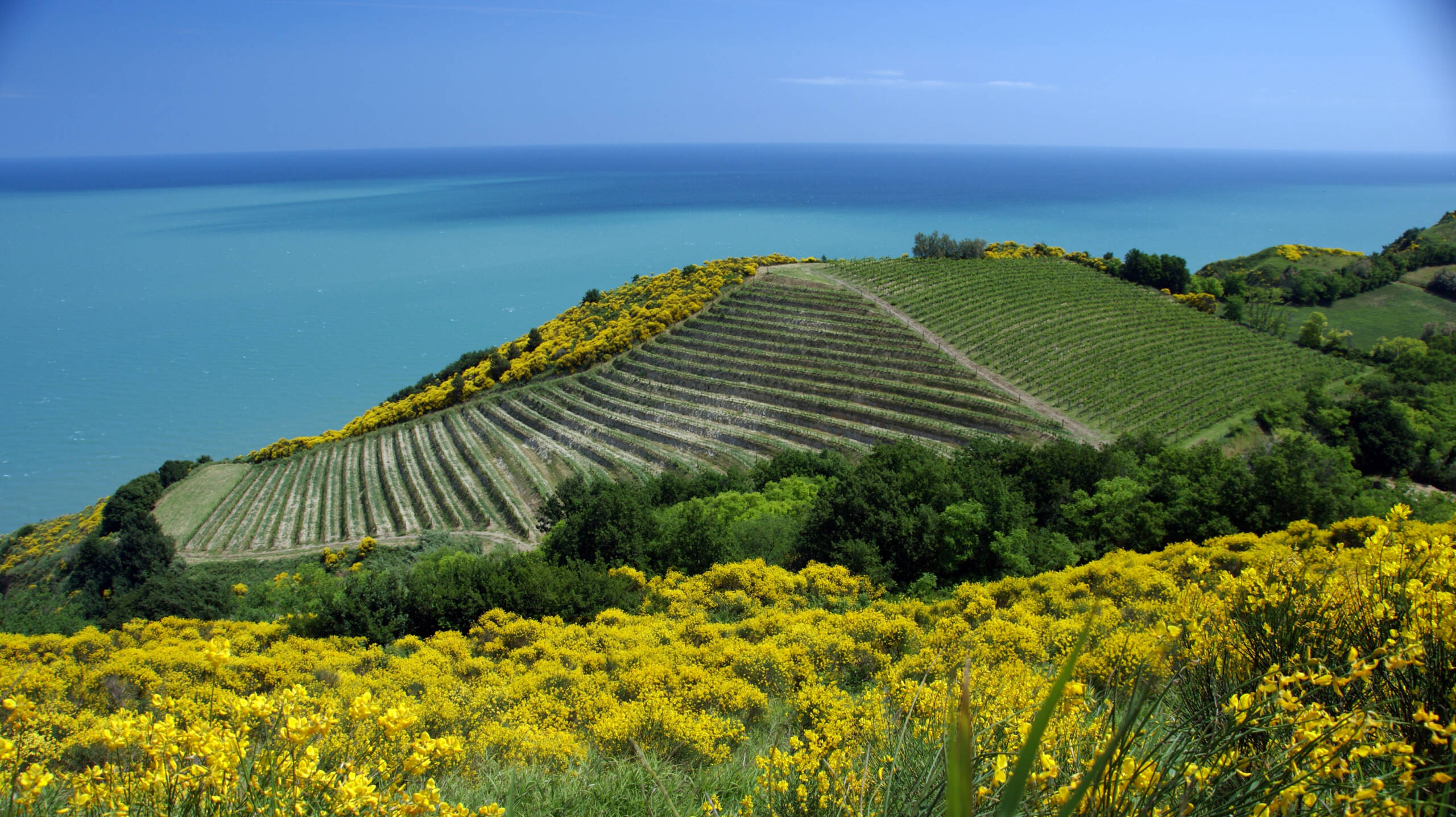
The Rive di Focara Vineyard
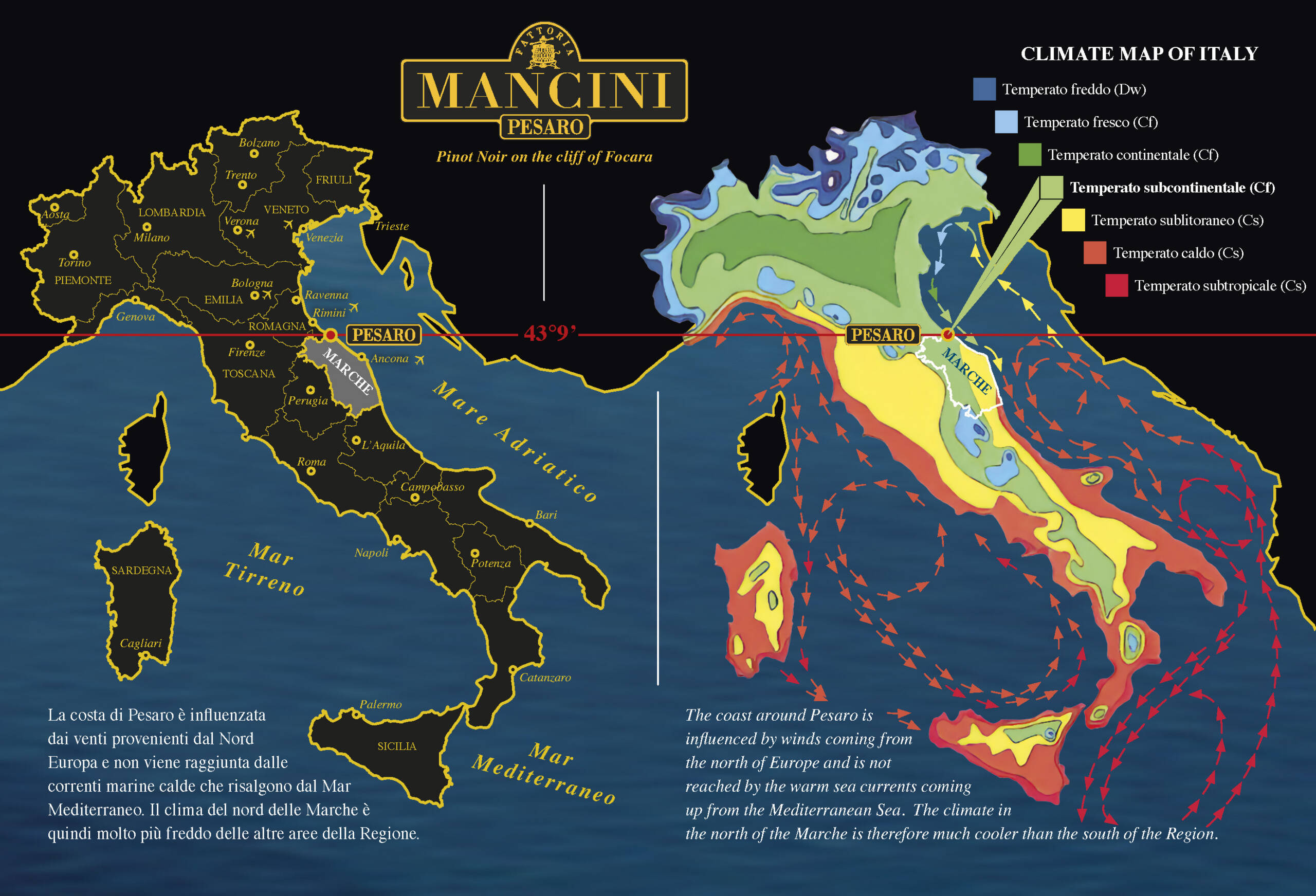
The coastline of Pesaro is influenced by winds coming from Northern Europe and is not reached by the warm sea currents rising from the Mediterranean Sea.
As a result, the climate in the northern Marche is significantly cooler than in other areas of the region.
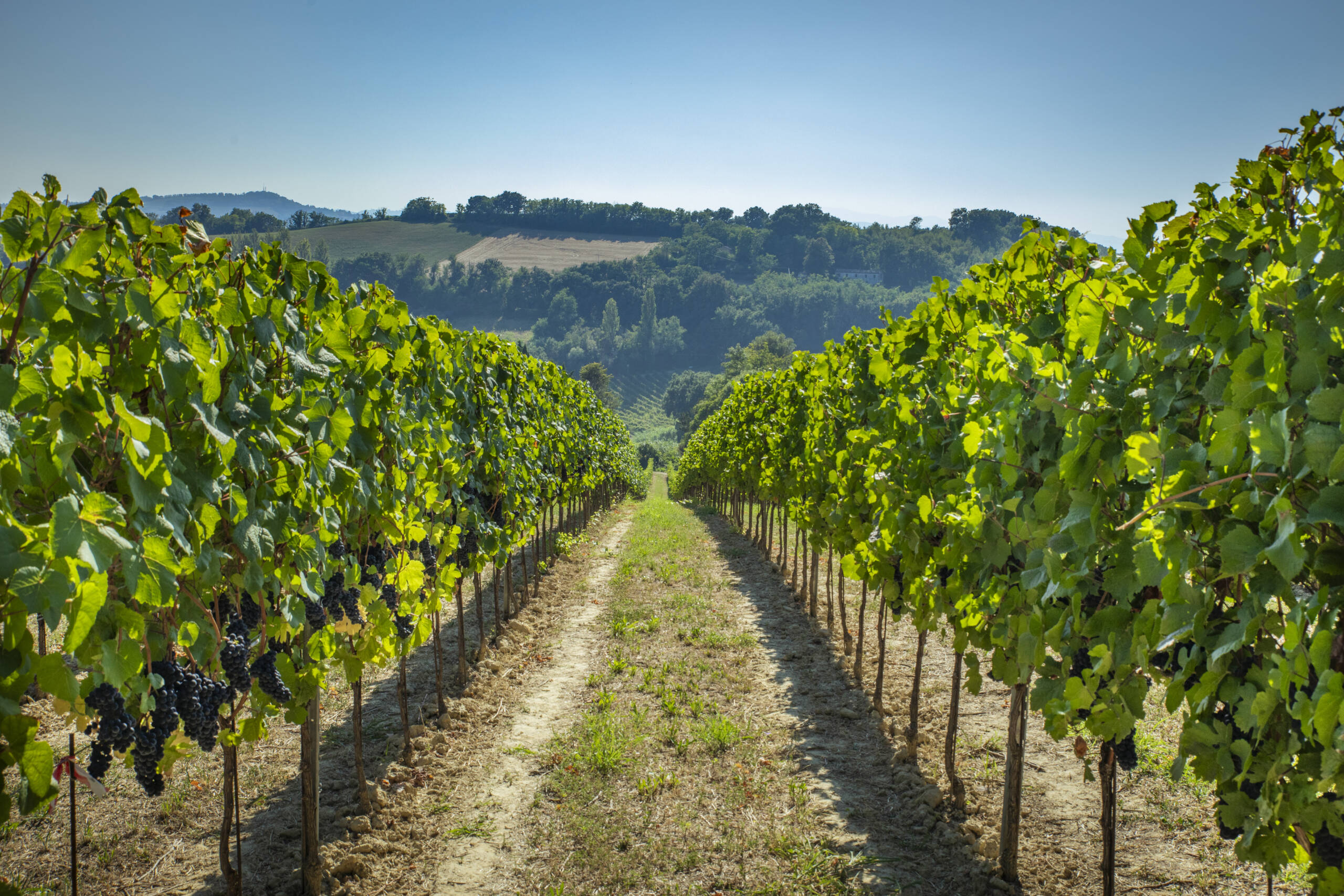
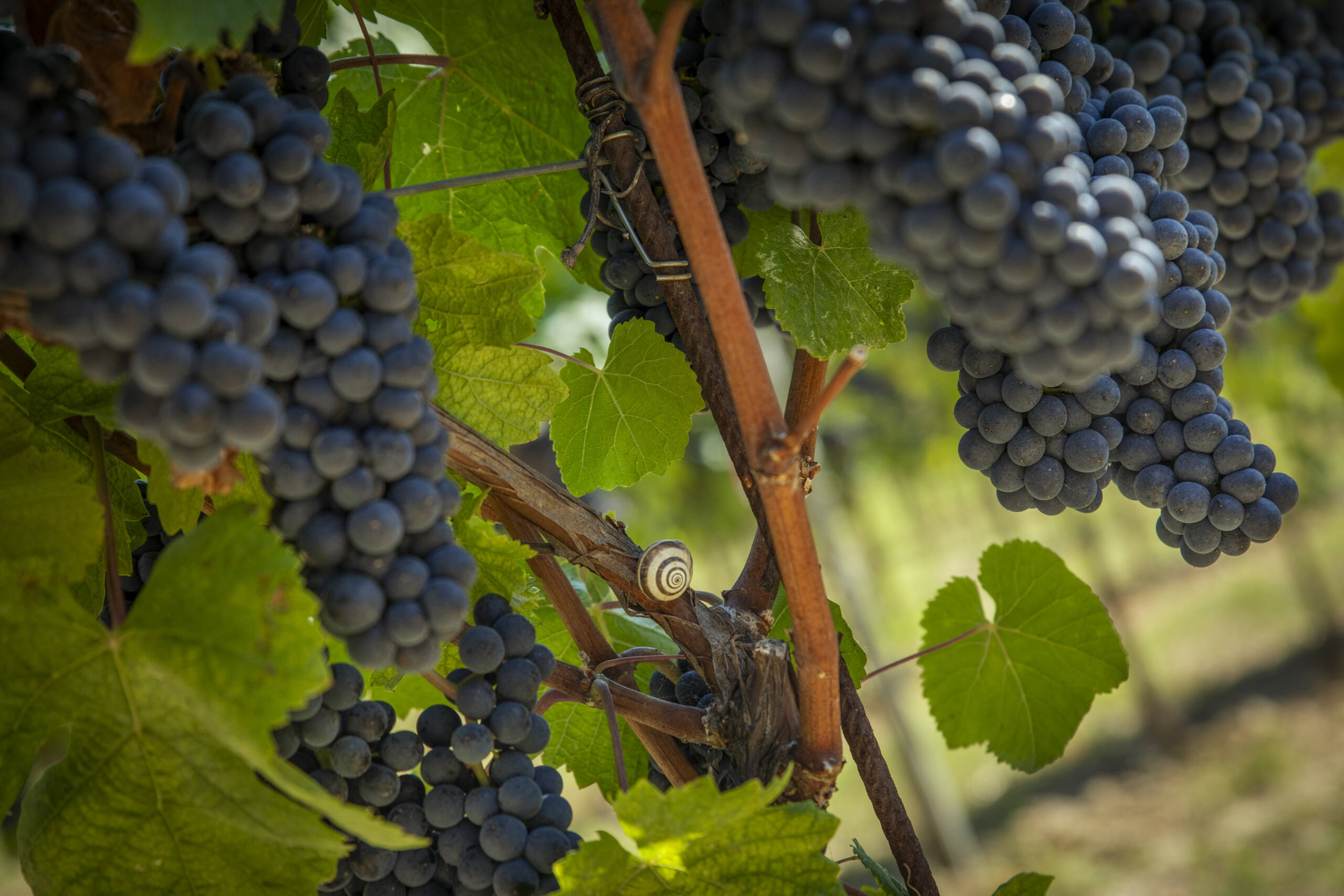
The main grape variety of the estate is Pinot Noir, introduced to the area in the early 19th century by the Napoleonic administration. Under the guidance of Viceroy Eugène de Beauharnais, Napoleon’s adopted son, Pinot Noir was planted in several estates expropriated from the Church.
In 1861, the Mancini family purchased one of these properties and have since preserved and propagated the very same Pinot Noir introduced during the French dominion.
Recognized as DOC in 2000 and registered among the national grape varieties in 2001.
This particular Pinot Noir has, after two centuries of evolution and adaptation, come to be considered a truly native variety.
Remarkably, the transformation of the original French clone gave rise to a clone entirely distinct from those previously known, attracting the attention of the Viticulture Chair at the Institute of Tree Crops of the University of Milan in 1998. This study led to its recognition and registration among the national varieties under the name Pinot Nero Pesaro (Gazzetta n. 280, December 1, 2001).
Fattoria Mancini now maintains a selection of these prized family clones, considered unique and indigenous, which have been used since 2005 for all newly planted vineyards on the estate.
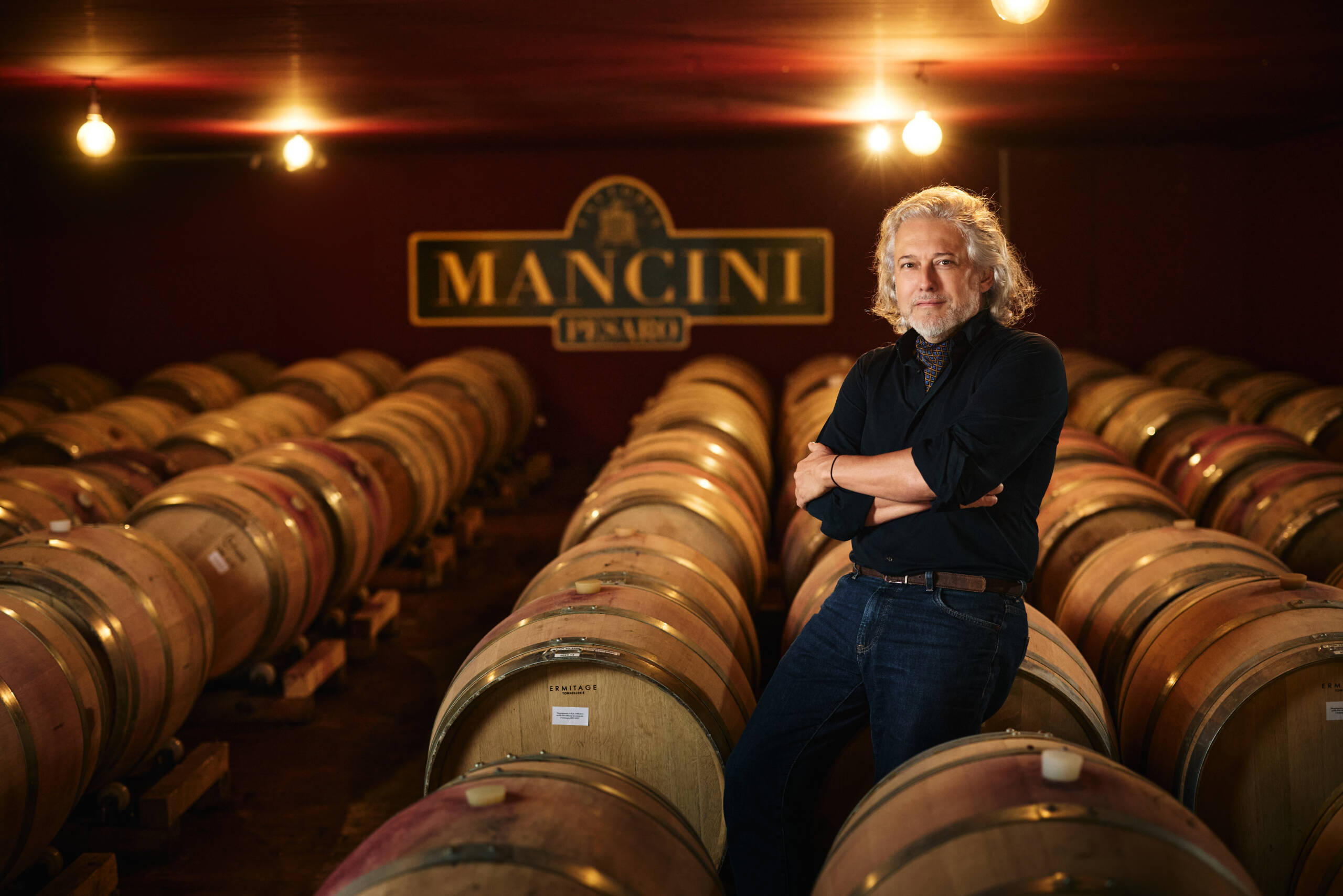
During those years, alongside the University’s studies on clonal selection, experiments were conducted on a particular training system designed and presented by Luigi Mancini, the fifth generation of the family, to colleagues around the world. This work generated significant interest and led to Fattoria Mancini being one of only ten wineries outside the USA invited to the IPNC (International Pinot Noir Celebration), the world’s most important Pinot Noir conference held every July in Oregon.
In the early 2000s, Luigi Mancini undertook numerous international professional trips, frequently to Burgundy and, naturally, to countries closely associated with Pinot Noir production: New Zealand, Oregon, and California.
Sustainable viticulture in the Monte San Bartolo Natural Park.
The placement of our vineyards within a protected ecosystem like the Monte San Bartolo Natural Park imposes a clear responsibility: to operate with environmental sensitivity and agronomic awareness.
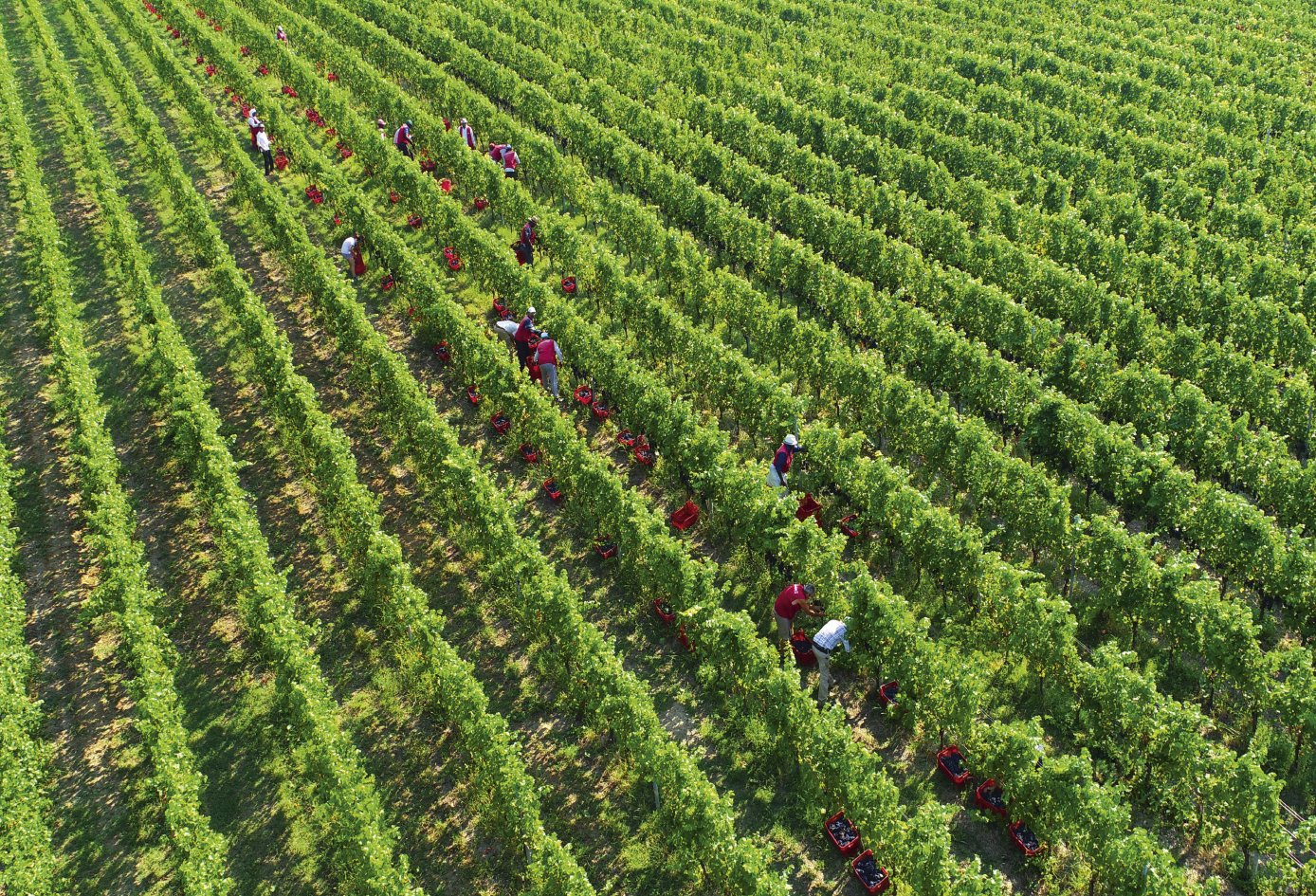
The estate has chosen to orient its viticulture according to principles of full environmental sustainability. All new plantings have been designed to allow soil management exclusively through mechanical means, completely eliminating the use of chemical herbicides. Fertilization is carried out using manure from local farms, respecting the natural fertility of the soil and promoting biodiversity. Harvesting is carried out entirely by hand.
The Vineyards and Crus in the Monte San Bartolo Natural Park.
Fattoria Mancini’s 20 hectares of vineyards are located within the Monte San Bartolo Natural Park. It is on these hills, surrounding the historic Pesaro villages of Roncaglia and Focara, that our estate vineyards are situated. The uniqueness of the terroir, combined with our long-standing experience in Pinot Noir winemaking, has for years guided a careful enhancement of each individual vineyard through targeted agronomic management and separate vinifications.
This vision combines technical expertise with interpretive sensitivity, aiming to express the true identity of every vineyard site.
The resulting wines are faithful ambassadors of their place of origin: unique and capable of conveying—through elegance and personality—the deep connection between grape variety, terroir, and the estate’s distinctive style.
The Rive Vineyards on the Focara Cliffs, 1.3 km south of the enchanting medieval village of Fiorenzuola di Focara.
This north-facing stretch of coastline enjoys stunning sunsets over the sea, but it is also one of the coldest areas along the Adriatic.
The terraced Rive vineyard in spring. On the right is the experimental section created in 2000 in collaboration with the University of Milan for the study and propagation of the finest Pinot Noir clones developed over two centuries of adaptation to the local terroir. This led to a selection of prized family clones, now considered unique and indigenous, which have been used since 2005 for all newly planted vineyards on the estate.
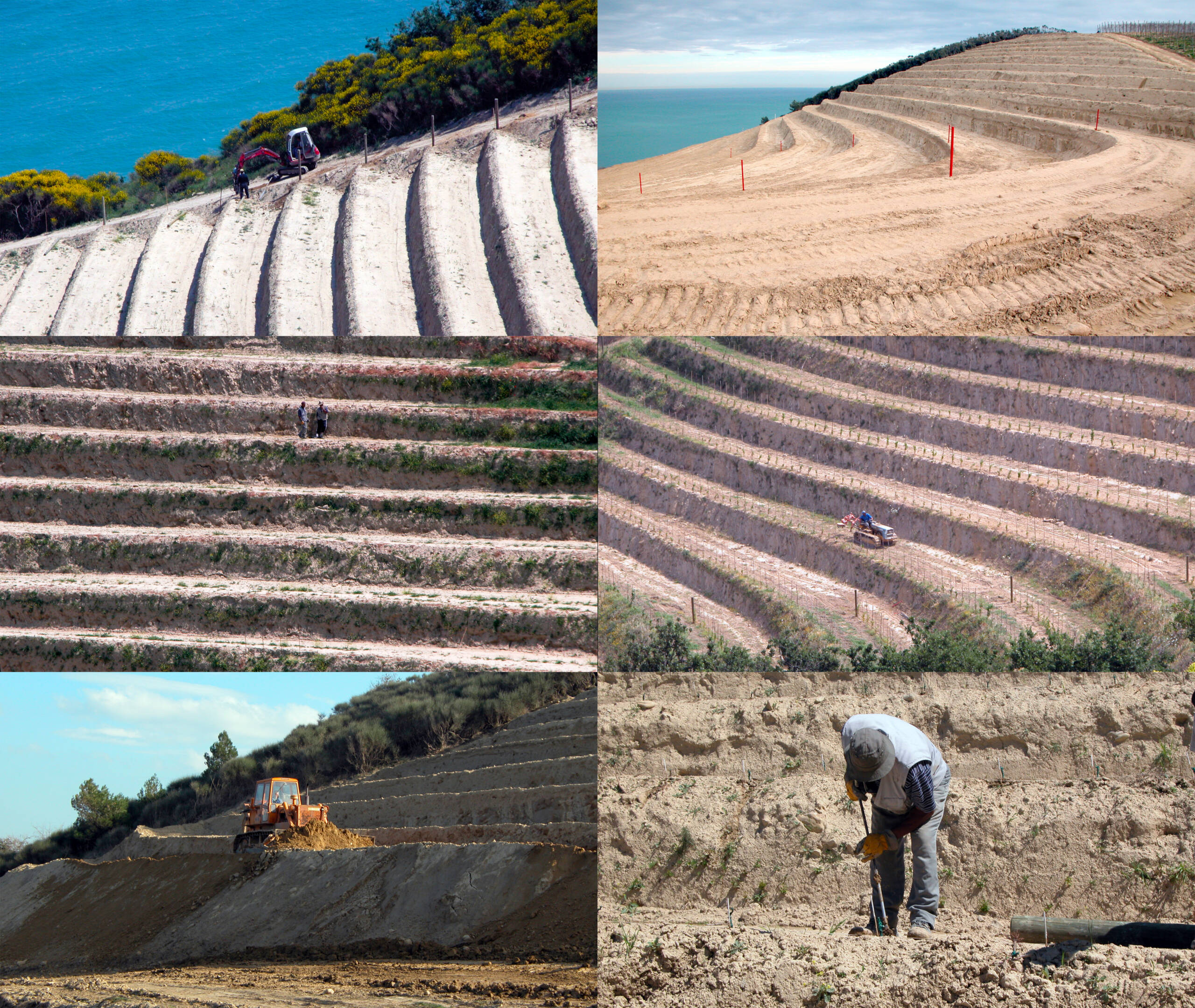
Terracing work on the Rive Vineyard carried out in 2005.
In addition to Pinot Noir, the cultivated varieties include Sangiovese, Albanella—an indigenous grape closely tied to local tradition—and Ancellotta.
Agronomic management is based on sustainability principles, with intentionally low yields and cultivation techniques aimed at maximizing varietal expression.
Fattoria Mancini vinifies only grapes from its own vineyards. In addition to traditional red winemaking, the estate has specialized for over forty years in producing Pinot Noir vinified as a white wine. The first vintage of the label that has now become the company’s flagship, Impero Blanc de Pinot Noir, dates back to 1998.
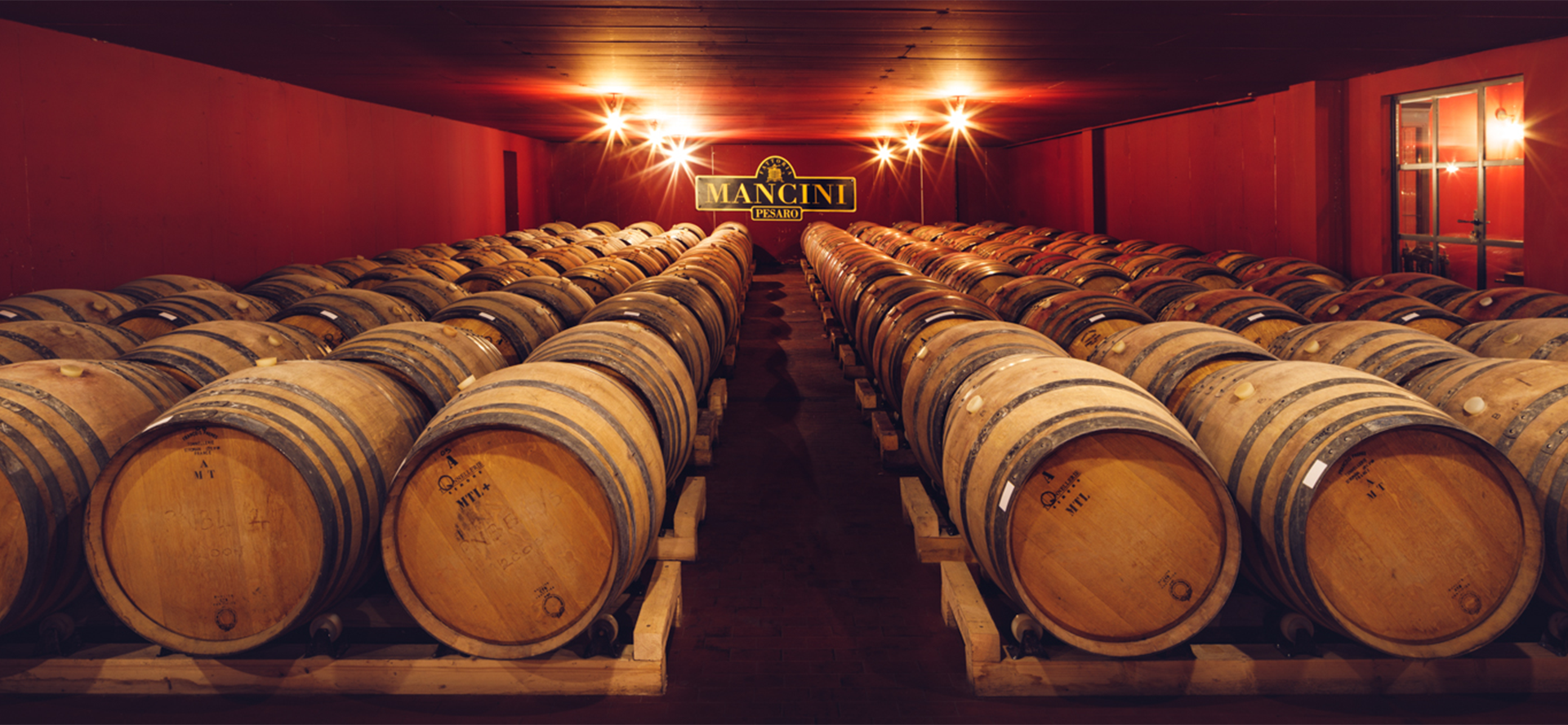
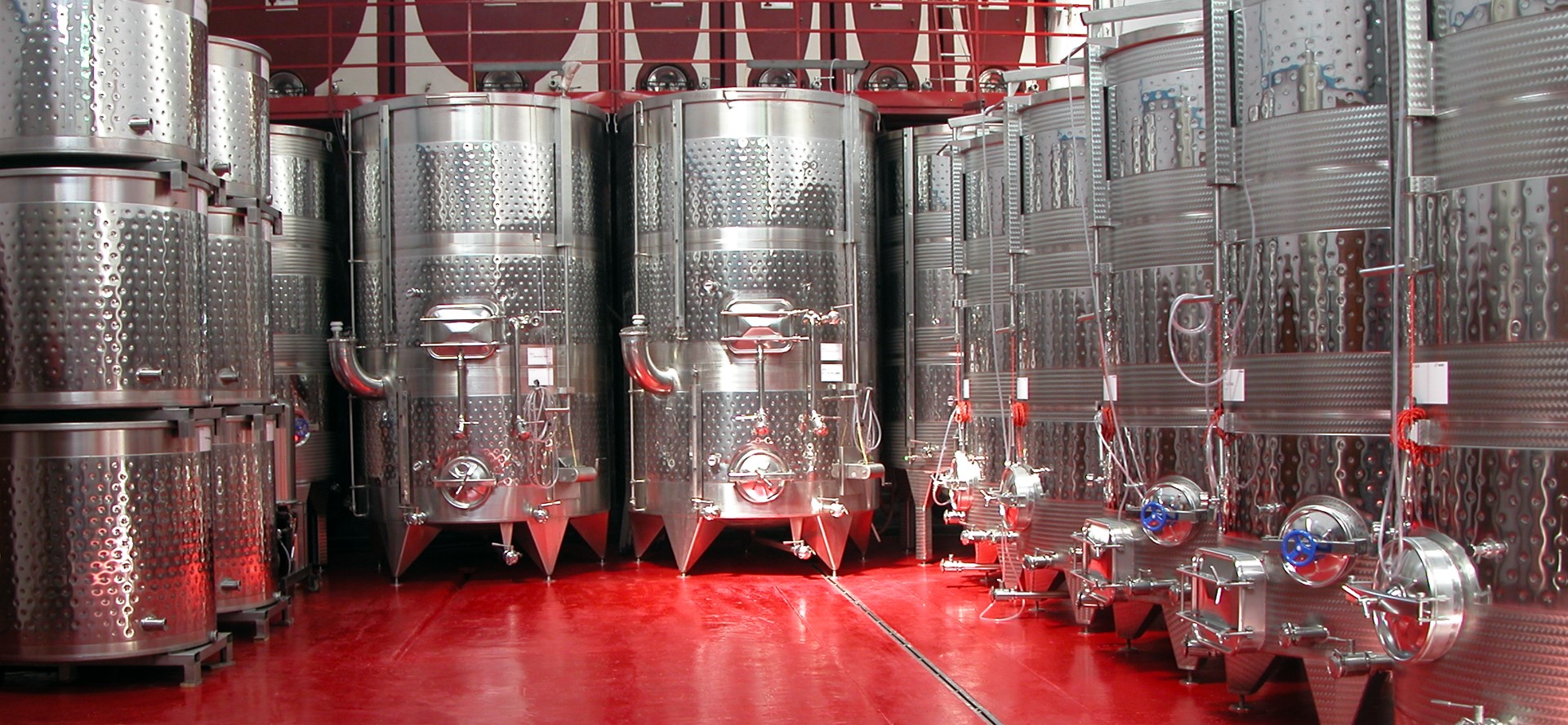
The winery is structured to ensure optimal control over every stage of production. Grapes are vinified using methods that combine the latest winemaking techniques with respect for the raw material.